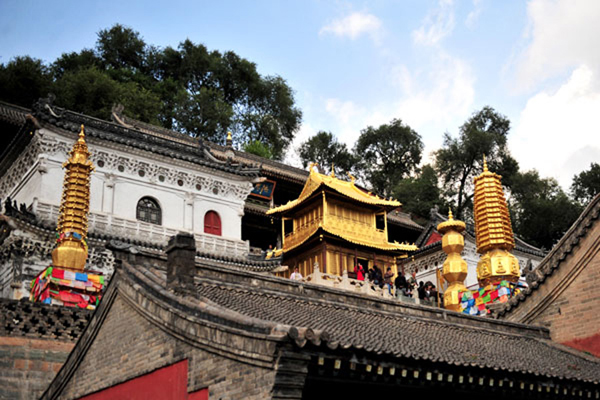
Wutai Mountain
Introduction
Wutai Mountain, known as the "Mountain of Five Terraces," is one of the four sacred Buddhist mountains in China and a significant tourist attraction. Located in Wutai county, Shanxi province, approximately 230 kilometers from the provincial capital, Taiyuan, Wutai Mountain is renowned for its majestic peaks and cliffs, with 50 notable summits. Spanning an area of 300 square kilometers, it houses 60 temples, making it a prominent center for Chinese Buddhism. In recognition of its cultural and natural significance, Wutai Mountain was designated a UNESCO World Heritage Site on June 26, 2009.
The mountain's name derives from its unique topography, characterized by five flat and open peaks. These peaks are celebrated for their precipitous slopes and breathtaking vistas. As the highest mountain in North China, Wutai Mountain serves as a hub for religious pilgrimage and a sanctuary for Buddhist culture. The mountain's temples have been erected over a vast timeline, starting from the 1st century AD through to the early 20th century.
The mountain features a remarkable fusion of natural landscapes and Buddhist culture, reflecting the harmonious relationship between human belief and nature. Wutai Mountain's temples are a testament to the evolution of Buddhist architecture, influencing palace construction in China for over a millennium. Noteworthy structures include the East Main Hall of Foguang Temple, the highest surviving timber building from the Tang Dynasty (618-907), and the Ming Dynasty (1368-1644) Shuxiang Temple, which showcases 500 intricate statues depicting Buddhist stories within three-dimensional landscapes of mountains and water.
Geography
Wutai Mountain's geography is distinguished by its unique morphology of five distinct terrace-like peaks. These peaks are known as the North, South, East, West, and Central Terraces, each with its own distinct characteristics. The peaks are bare, lacking the dense forestation typical of other mountainous regions, which adds to their stark and majestic appearance. The mountain's highest point, the North Terrace, reaches an elevation of 3,058 meters, making it the highest point in Northern China and offering panoramic views of the surrounding landscape.
The mountain is located in a region with a continental monsoon climate, characterized by cold, dry winters and warm, wet summers. The high elevation results in cooler temperatures year-round, making it a popular summer resort destination. The unique climatic conditions have also contributed to the mountain's nickname, "Qingliang Mountain," which means "Cool and Pleasant Mountain."
Wutai Mountain's geographical features, combined with its religious significance, make it a unique blend of natural beauty and cultural heritage. The mountain's terrain includes rolling hills, deep valleys, and clear streams, providing a serene and picturesque setting for both pilgrimage and tourism.
History
Over the centuries, the mountain has been a focal point for religious activities and royal patronage. The tradition of pilgrimage to Wutai Mountain can be traced back to the Northern Wei Dynasty (386-534), during which nine emperors made 18 pilgrimages to the site to pay their respects to the bodhisattvas. These events are commemorated through steles and inscriptions found throughout the mountain, underscoring its historical and spiritual importance.
During the Tang Dynasty (618-907), Wutai Mountain became a prominent center of Buddhist learning, attracting scholars and devotees from across Asia, including India, Japan, Mongolia, Korea, Nepal, and Sri Lanka. The mountain's monasteries became repositories of Buddhist knowledge, housing extensive collections of religious texts amassed by emperors and scholars.
Wutai Mountain is unique among China's sacred mountains where both Chinese Buddhism and Tibetan Lamaism are practiced. Esteemed religious figures such as the Dalai Lamas, Panchen Lamas, and Lcangskyahothogthu (a Living Buddha) have visited and preached here, with some even being interred on the mountain.
The mountain's temples have withstood the test of time, with many structures remaining in excellent condition today. Among these is the Nanchan Temple, which boasts the earliest wooden structure of its kind in China, dating back 1,240 years. The temple houses 17 painted figurines and is considered a treasure of Chinese architectural heritage. Another significant site is the Big White Pagoda, a symbol of Wutai Mountain. The pagoda, built in a Nepalese style, stands at 75.3 meters and houses a small India-made iron stupa containing relics of Sakyamuni.
Cultural Significance
Wutai Mountain holds immense cultural significance as a sacred site of Buddhism in China. It is revered as the abode of Manjusri, the Bodhisattva of Wisdom, who is believed to have preached and imparted his teachings on the mountain. This association has elevated Wutai Mountain to a pinnacle of spiritual reverence, attracting pilgrims and devout followers from across the globe.
The mountain is home to a diverse collection of temples, each housing unique Buddhist relics and treasures. These temples serve as vital repositories of religious art, including over 100,000 exquisite sculptures and paintings. The artistic styles found within these temples exhibit the evolution of Buddhist art and architecture over the centuries. The fusion of architectural styles from different dynasties illustrates the influence of Buddhist culture on Chinese aesthetics and design.
One of the most significant cultural treasures on Wutai Mountain is the Grand Eastern Hall of Foguang Temple. This Tang Dynasty structure, preserved since 857, houses an impressive array of statues that constitute China's largest group of colored statues from that era. These statues, including representations of the Three Buddhas of Past, Present, and Future, along with Bodhisattvas and their followers, showcase the artistic prowess of the Tang Dynasty and the enduring significance of Buddhist iconography.
Furthermore, Wutai Mountain's cultural impact extends beyond China's borders. Its influence can be seen in the naming of similar mountains in Korea and Japan, as well as other Chinese provinces such as Gansu and Hebei. This cross-cultural exchange underscores the mountain's role as a beacon of spiritual and cultural connectivity.
Biodiversity
Wutai Mountain is not only renowned for its cultural and historical significance but also for its rich biodiversity. The mountain's unique geographical features and climatic conditions have fostered a diverse ecosystem that includes a wide variety of flora and fauna.
The vegetation on Wutai Mountain ranges from deciduous and coniferous forests at lower elevations to alpine meadows and shrublands at higher altitudes. The diverse plant life supports a variety of animal species, making the mountain a haven for wildlife enthusiasts and researchers. The region is home to numerous bird species, including the rare black stork, as well as mammals such as the Chinese goral, a type of mountain goat. The presence of these species adds to the ecological importance of Wutai Mountain.
The mountain's flora and fauna contribute to its status as a national nature reserve, emphasizing the need for conservation efforts to protect and preserve its unique biodiversity. The interplay between the natural environment and cultural heritage on Wutai Mountain highlights the importance of sustainable practices to maintain this delicate balance.
Tourism
Wutai Mountain's blend of natural beauty, cultural heritage, and spiritual significance has made it a popular destination for tourists and pilgrims alike. The mountain's serene environment and historically significant sites attract visitors seeking both spiritual enrichment and leisure.
Visitor Attractions
The mountain's attractions include a wide array of temples, each offering a unique glimpse into the rich tapestry of Buddhist culture. Key sites include the Xiantong Temple, the largest and oldest temple on the mountain, originally built in the Eastern Han Dynasty, and the Shuxiang Temple, renowned for its complex of 500 statues. The East Main Hall of Foguang Temple is a must-see for its architectural and historical significance as a preserved Tang Dynasty structure.
Other notable attractions include the Big White Pagoda and the spectacular natural landscapes, which provide excellent opportunities for hiking and photography. Visitors can explore the mountain's five terraces, each offering breathtaking views and a sense of tranquility.
Travel Tips
When planning a visit to Wutai Mountain, it is important to consider the seasonal climate variations. The summer months are the most popular time to visit, thanks to the mountain's cool and pleasant climate. However, visitors should be prepared for sudden weather changes, especially at higher elevations.
Travelers should also be mindful of the religious significance of the sites and show respect for local customs and practices. Dress modestly when visiting temples and be aware of any specific guidelines for behavior within religious areas.
Accommodation options near Wutai Mountain range from traditional inns to modern hotels, catering to different preferences and budgets. It is advisable to book accommodations in advance, especially during peak tourist seasons.
Conservation Efforts
The conservation of Wutai Mountain's cultural and natural heritage is of paramount importance to ensure its preservation for future generations. Efforts to protect the mountain's unique ecosystem and historical sites involve collaboration between governmental bodies, local communities, and international organizations.
Conservation initiatives focus on preserving the mountain's biodiversity, safeguarding its temples and cultural relics, and promoting sustainable tourism practices. These efforts aim to mitigate the impact of increased visitor traffic and ensure that the mountain's natural and cultural treasures remain intact.
Educational programs and community involvement are also key components of Wutai Mountain's conservation strategy. By raising awareness of the mountain's significance and encouraging responsible tourism, conservationists hope to maintain the delicate balance between cultural heritage and environmental sustainability.








